Skip to content
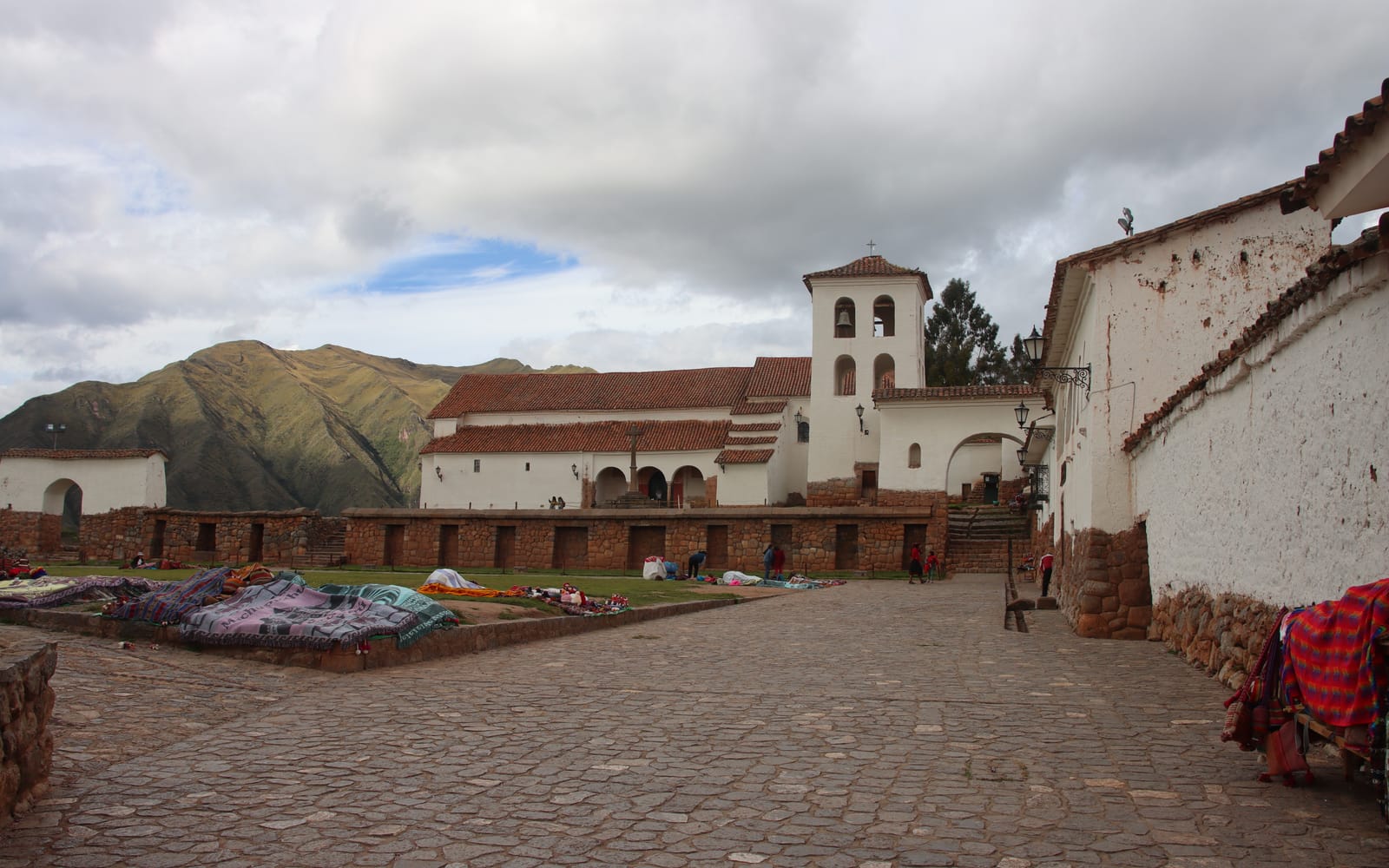
The colonial church and Inca terraces of Chinchero on the Andean plateau

Chinchero

Inca walls, adobe church, textile town

At 3,762 m Chinchero sits higher than Cusco, on the plateau between the city and the Sacred Valley — which is why most tours stop here first, before dropping into the warmer air below. Inca tradition holds it was the country estate of Túpac Yupanqui, Pachacuti’s son, and enormous terraces and polished walls survive from that period.

On top of the Inca foundations the Spanish built an adobe church, its interior covered floor to ceiling in 17th-century Cusco School painting. Outside, the square fills on Sundays with a market that is still partly barter, and a cluster of weaving cooperatives demonstrate the natural dyes — cochineal beetles crushed for red, plants boiled for yellow and green — that make Chinchero textiles collectable.

Top things to do at Chinchero

See the church interior

The colonial church stands on an Inca ceremonial platform and is painted throughout. Photography is normally not permitted inside.

Walk the Inca terraces

Below the plaza, broad agricultural terraces run down the hillside with an old Inca road crossing them towards the valley.

Watch a dyeing demonstration

The cooperatives show the full process from raw fleece to finished cloth, including the cochineal that turns from grey to scarlet in the palm of your hand.

Come on a Sunday

The Sunday market is the biggest and the most local of the week, spilling out of the square and down the surrounding lanes.
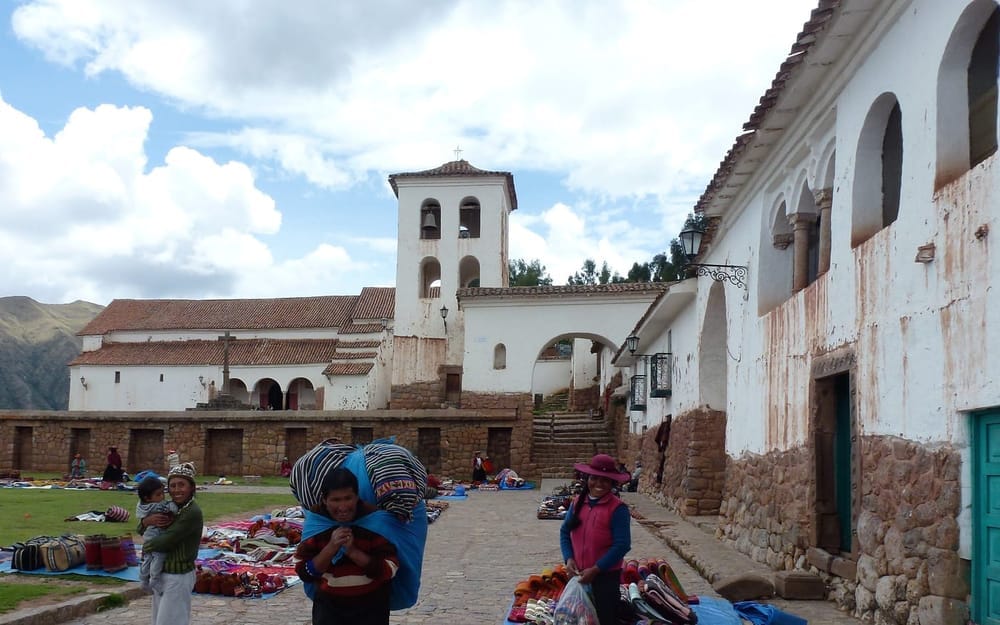
The colonial church and Inca terraces of Chinchero on the Andean plateau

How to get to Chinchero

  • From Ollantaytambo: about 55 minutes by car up onto the plateau.
  • From Cusco: about 50 minutes — Chinchero is normally the first stop on a Sacred Valley day tour.
  • By colectivo: frequent shared vans run from Cusco’s Grau area and drop you on the main road.

Insider tips

  • Entry to the archaeological complex and church is on the Cusco Tourist Ticket.
  • It is high and exposed, and mornings are properly cold. Layers matter here more than anywhere else in the valley.
  • Buy textiles at the cooperatives rather than roadside stalls — you can see who made the piece and how.
  • Cusco’s new international airport is being built beside the town, so expect construction traffic on the approach roads.

Best tours & tickets for Chinchero

These top-rated experiences are the easiest way to see Chinchero without organising a thing:
The whitewashed colonial church and market square of Chinchero Full-day tour from $26
🕒 Approx. 12 hours 📍 From Cusco (hotel pickup) ⭐ 4.8 (1,007)

Sacred Valley: Chinchero, Moray, Ollantaytambo & Pisac with Lunch

A fuller version of the standard loop, with a stop in Chinchero where women demonstrate the natural dyes and backstrap weaving that have run in these families for centuries.

  • Adds Chinchero and its weaving cooperatives to the classic circuit
  • Buffet lunch included, over 1,000 reviews
  • Moray, Maras and the Ollantaytambo temple complex
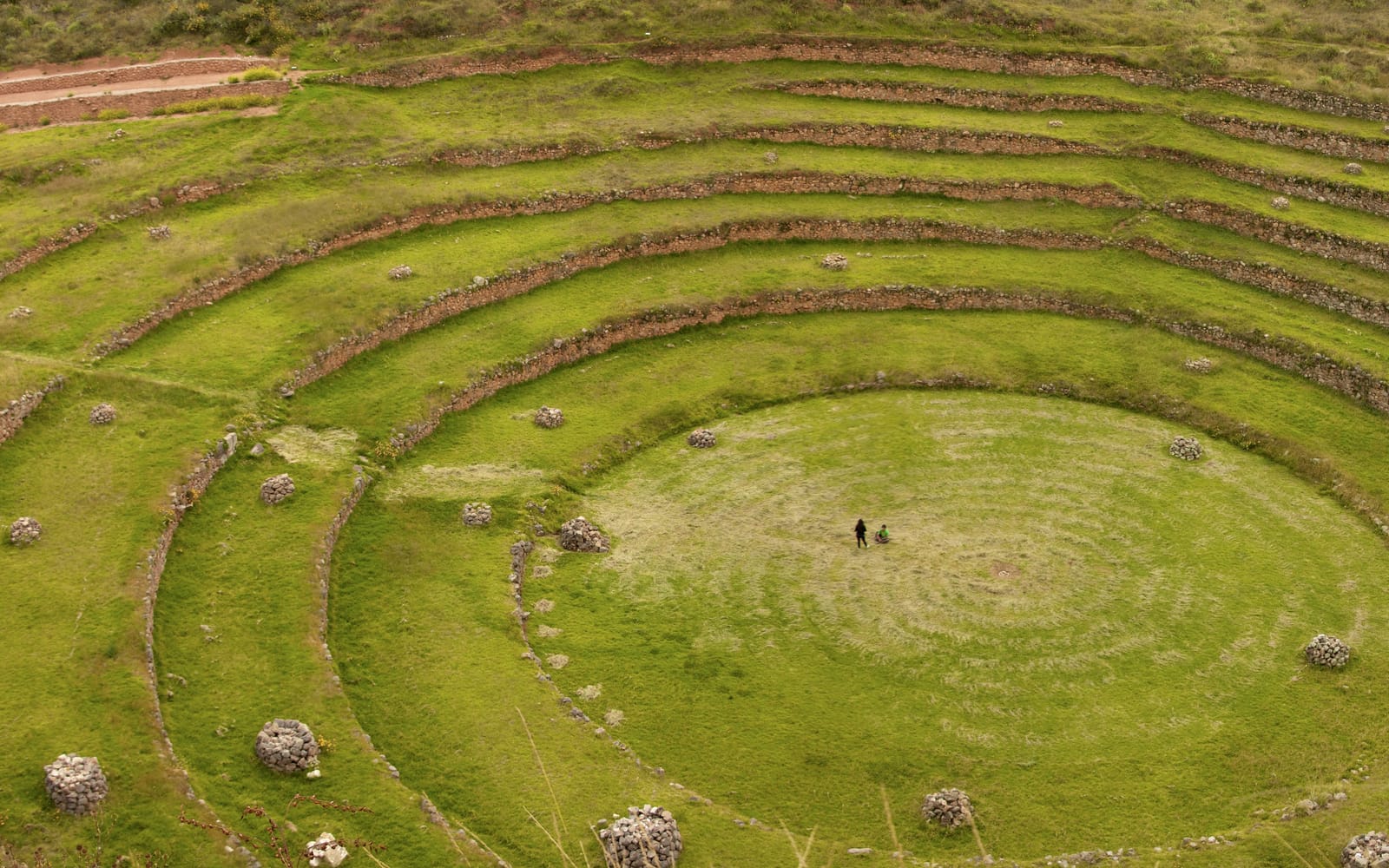
The concentric agricultural terraces of Moray in the Sacred Valley Private one-way tour from $119
🕒 Approx. 8 hours 📍 From Ollantaytambo (hotel pickup) ⭐ 5.0 (79)

From Ollantaytambo: Moray, Salt Mines & Chinchero, Ending in Cusco

Instead of paying for a transfer and a tour, do both at once. You leave Ollantaytambo after breakfast, work your way up onto the high plateau and roll into Cusco in the evening having seen three major sites.

  • A sightseeing day that doubles as your transfer back to Cusco
  • Moray, the Maras salt pans, lunch in Maras and Chinchero
  • Private vehicle and guide, drop-off at your Cusco hotel

Chinchero FAQs

Frequently asked questions

Is Chinchero worth visiting?

Yes, particularly for textiles and for the church, which is one of the finest colonial interiors in the region. It is also a useful acclimatisation stop, being higher than everything else you will visit that day.

What day is the Chinchero market?

There is a daily craft market on the square, but the main market is on Sunday, when villagers come in from the surrounding plateau and part of the trade is still barter.

How far is Chinchero from Ollantaytambo?

About 30 km and 55 minutes by road, climbing nearly 1,000 m onto the plateau. Tours that end in Cusco usually take it in on the way back.

All places to see

The terraces of Ollantaytambo rising towards the Sun Temple Inca sites & ruins

Ollantaytambo Ruins

Pachacuti’s unfinished masterpiece

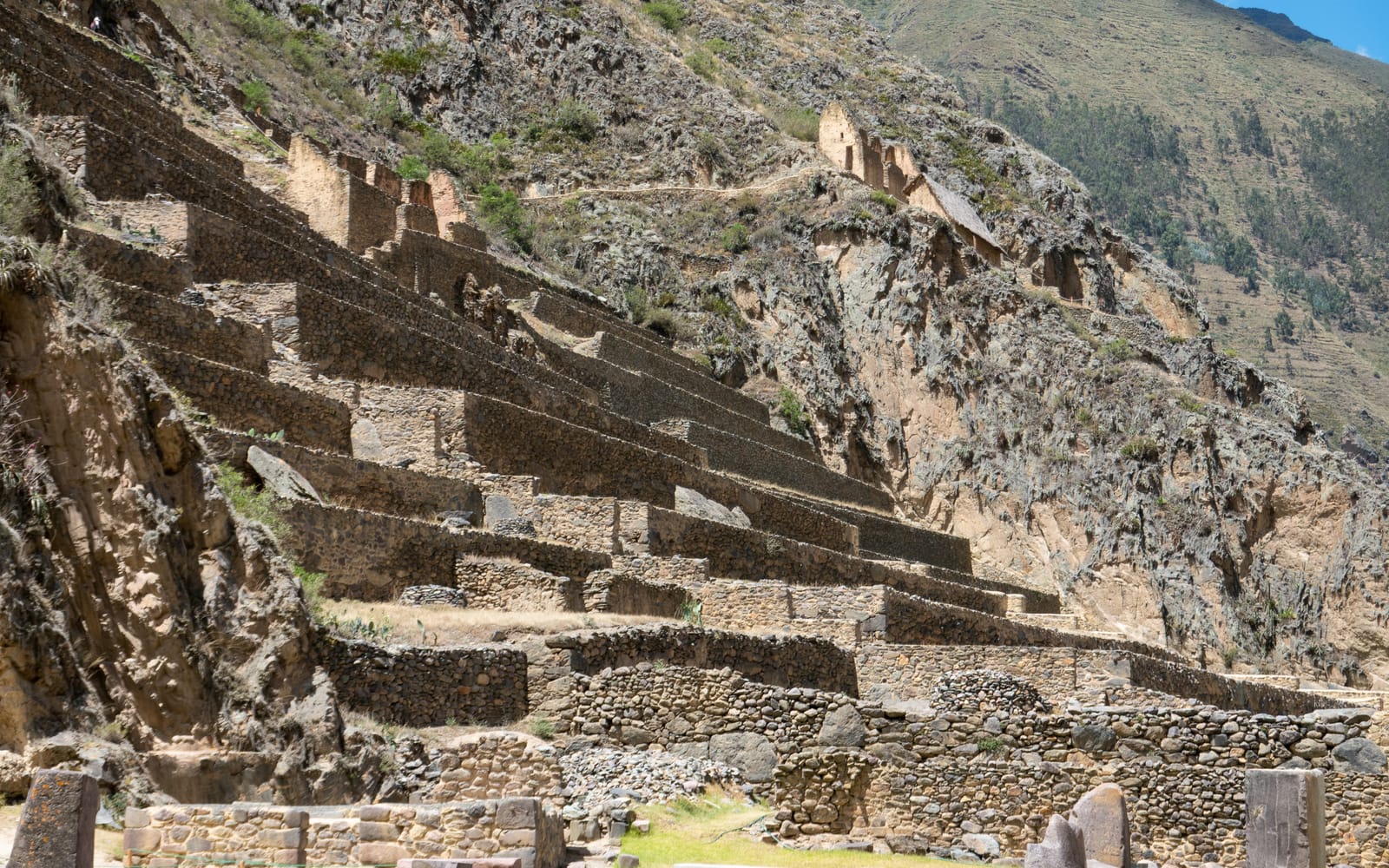
The great terraced temple hill above the town is one of the finest surviving Inca sites anywhere — seventeen tiers of stonework climbing to a Sun Temple whose fifty-tonne pink monoliths were dragged from a quarry across the valley and never quite set in place.

Inca storehouses clinging to the cliffs of Pinkuylluna above Ollantaytambo Inca sites & ruins

Pinkuylluna

Free views, Inca storehouses

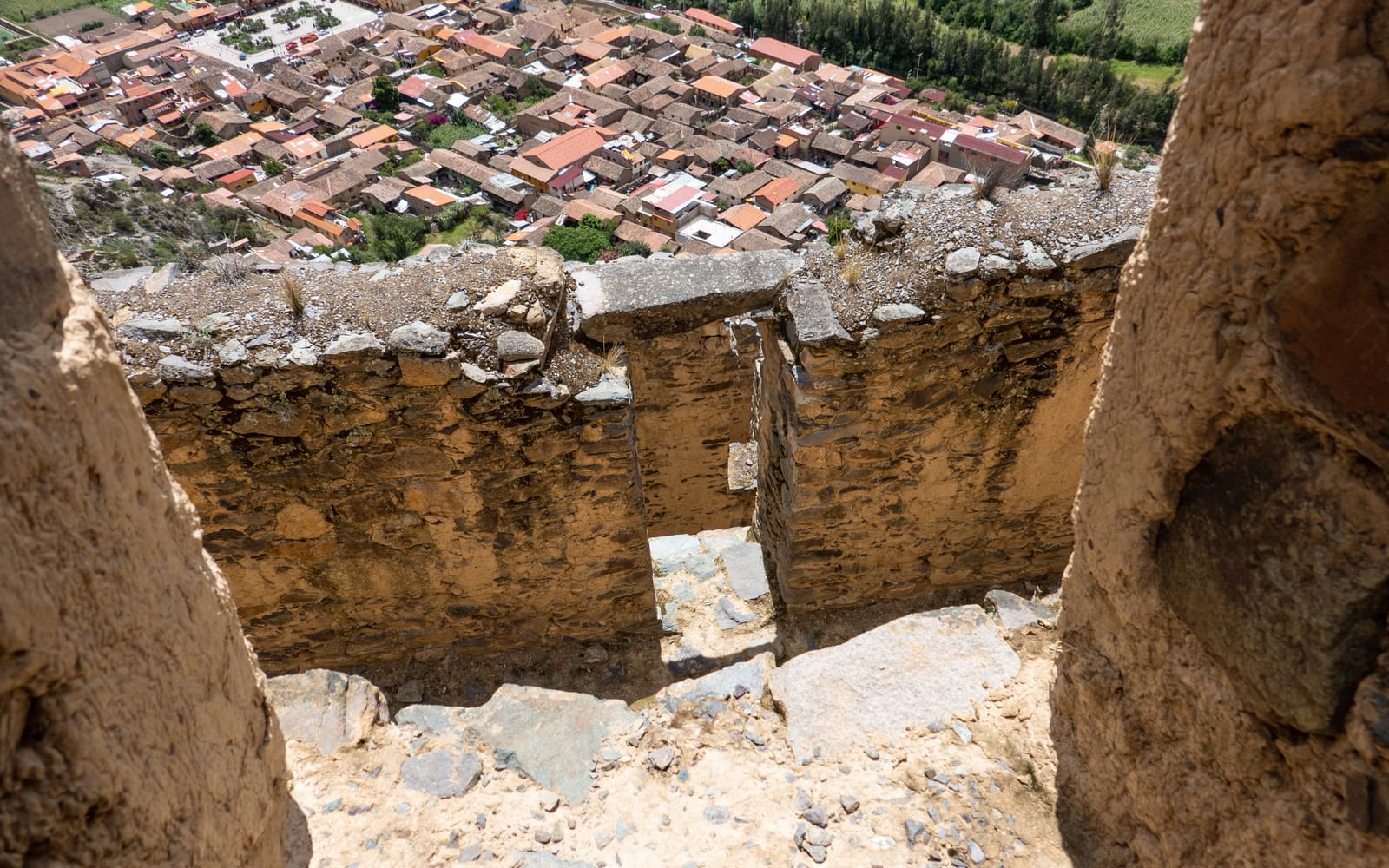
On the mountain facing the ruins, a steep footpath climbs past Inca granaries built high in the cold, dry air to preserve grain. It costs nothing, takes about an hour, and gives you the single best photograph of Ollantaytambo.

A narrow cobbled Inca street with original stone walls in Ollantaytambo Town & culture

The Inca Old Town

The last living Inca town

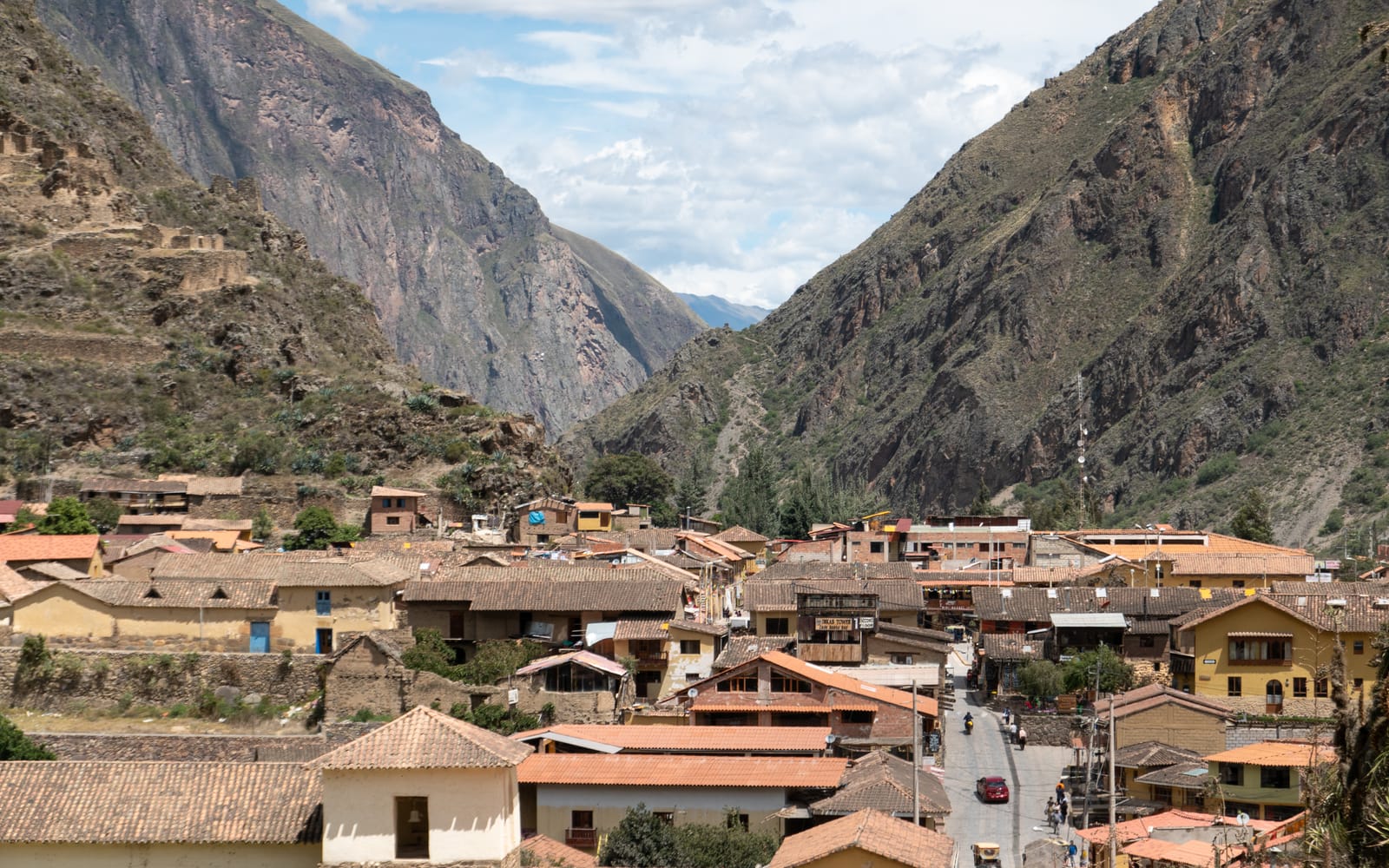
North of the plaza lies Qosqo Ayllu — a grid of walled Inca compounds, doorways and stone water channels laid out in the 15th century and lived in ever since. Nowhere else in Peru can you walk an Inca street that never stopped being a street.