Skip to content
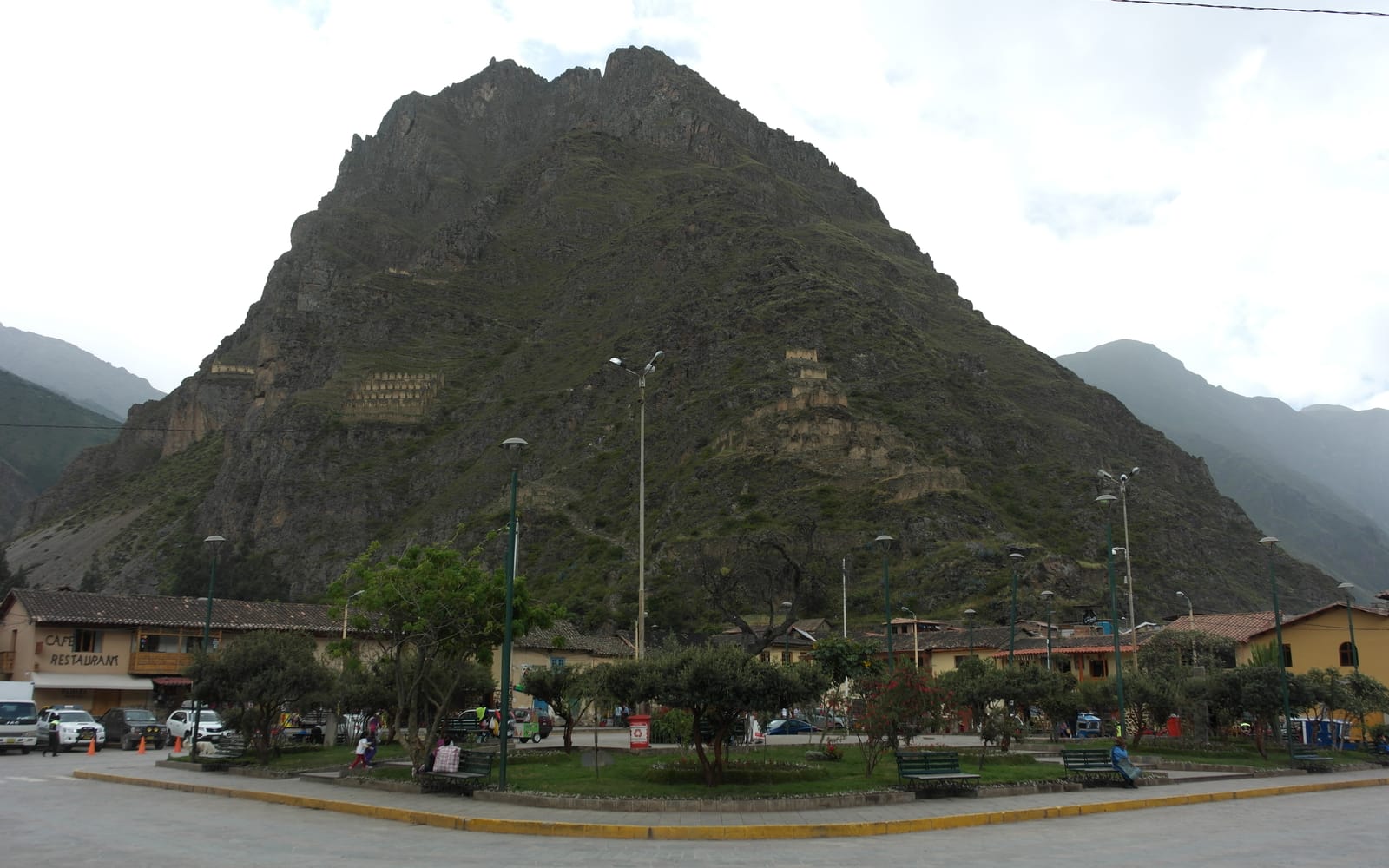
A narrow cobbled Inca street with original stone walls in Ollantaytambo

The Inca Old Town

The last living Inca town

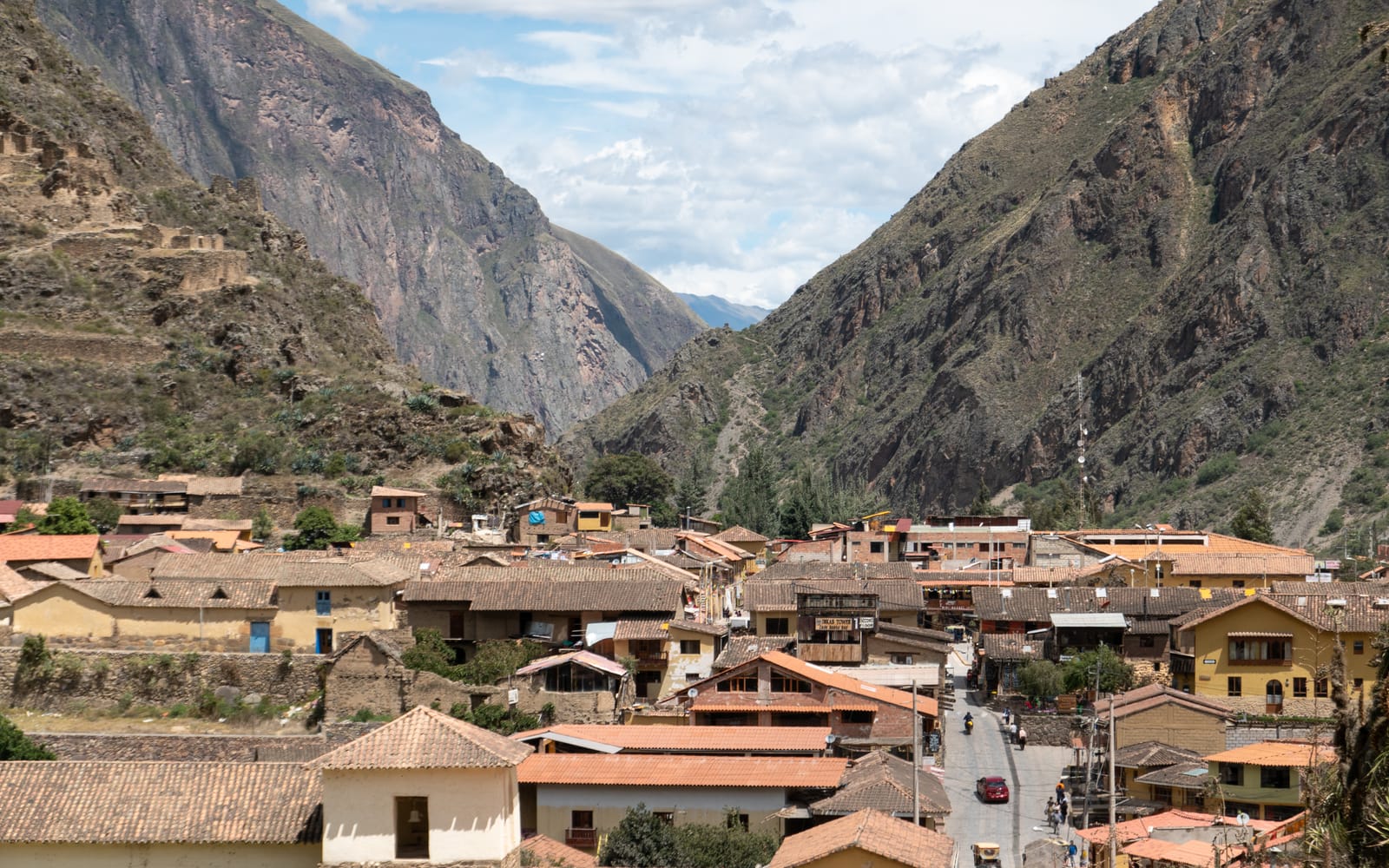
Ollantaytambo is routinely described as the last living Inca town, and for once the marketing is accurate. Walk north from the Plaza de Armas and the streets narrow into a grid of fifteen rectangular blocks laid out under Pachacuti in the 15th century. Each block is a cancha — a walled compound with a single trapezoidal doorway opening onto the street and several houses sharing a courtyard inside.

People still live in them. Behind those Inca doorways are kitchens, guinea pigs, drying maize and satellite dishes. The stone channels running down the middle of the lanes still carry drinking and irrigation water off the mountain, the same system, still working, after more than five hundred years of continuous use.

Top things to do at The Inca Old Town

Walk Calle del Medio

The central lane of Qosqo Ayllu is the best-preserved: original walls, original doorways, and the water channel running down its centre.

Look through a cancha doorway

Where courtyards are open to the street you can see how a compound works. Ask before photographing — these are homes, not exhibits.

Sit out the afternoon on the plaza

The square has benches, an ATM, a handful of cafés and, most afternoons, the sound of a school band rehearsing somewhere out of sight.

Browse the market stalls

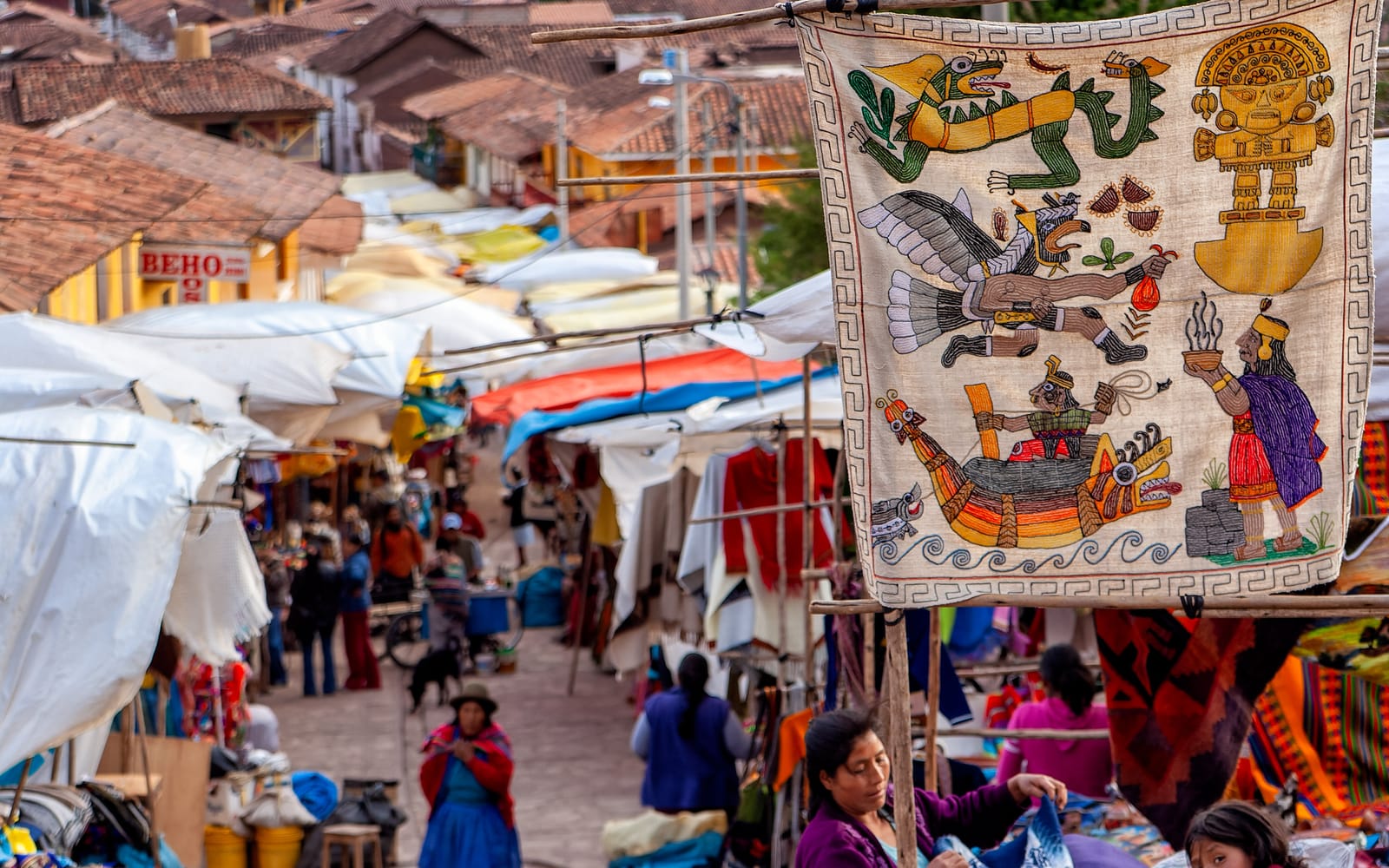
The lanes leading to the ruins are lined with textile and craft stalls. Prices drop noticeably once you step away from the site entrance.

Find a chichería

A red plastic bag on a pole outside a house means home-brewed chicha de jora is being served inside. It is a genuinely local institution and costs a couple of soles.
A narrow cobbled Inca street with original stone walls in OllantaytamboA narrow cobbled Inca street with original stone walls in Ollantaytambo

How to get to The Inca Old Town

  • The old town starts at the Plaza de Armas and runs north to the foot of the ruins — the whole grid is a ten-minute walk end to end.
  • From the railway station it is about 1.5 km uphill; mototaxis wait outside and cost a few soles.
  • From Cusco: collectivos and private transfers drop you at the plaza or at your hotel door.

Insider tips

  • The cobbles are uneven and the channels are open — wheeled luggage is a struggle. Ask your hotel about a mototaxi from the station.
  • ATMs in town are few and occasionally empty. Bring soles from Cusco, and keep small notes for markets and mototaxis.
  • Ollantaytambo’s biggest fiesta is Señor de Choquekillka around Pentecost, in May or June — dancing, brass bands and bullfights over several days.
  • Evenings are cold year-round. Even in the dry season you will want a fleece after sunset.

Best tours & tickets for The Inca Old Town

These top-rated experiences are the easiest way to see The Inca Old Town without organising a thing:
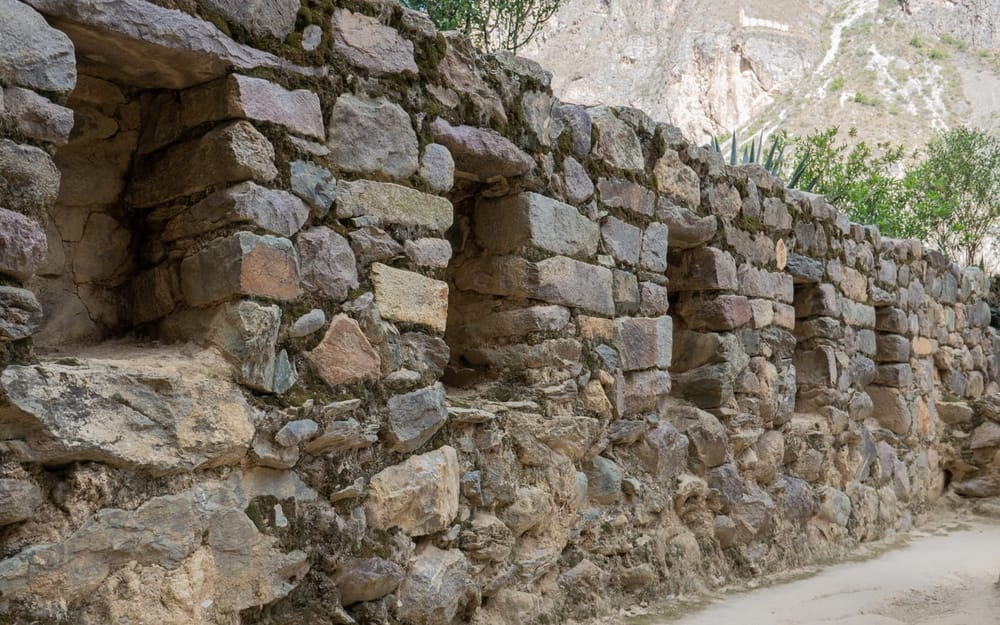
Inca stonework and terraces in the Ollantaytambo archaeological park Private cultural experience from $90
🕒 Approx. 3–4 hours 📍 From Ollantaytambo ⭐ 4.6 (5)

From Ollantaytambo: Private Spiritual Tour with an Andean Guide

A different reading of the same stones: not dates and dynasties but why this valley was laid out the way it was, and what the mountains around it still mean to the people who farm below them.

  • Walk the archaeological site with a Quechua-speaking Andean guide
  • A despacho offering to Pachamama, explained rather than performed at you
  • Meditation facing the sacred apu mountains that ring the town
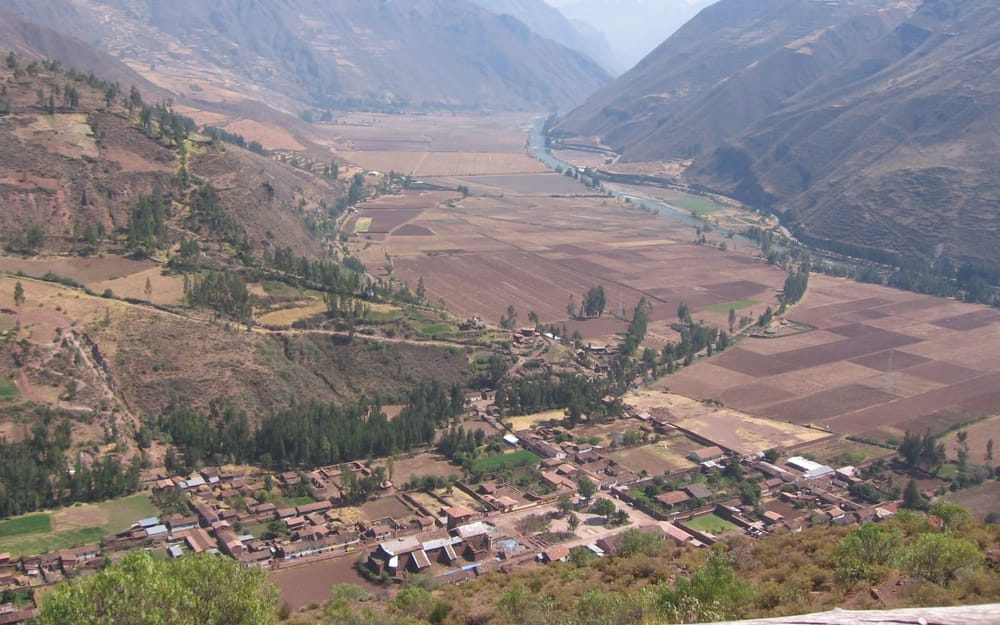
The Urubamba valley road winding between Andean mountains Private transfer from $25
🕒 Approx. 1.5–2 hours 📍 From Cusco (hotel pickup) ⭐ 4.8 (119)

Cusco: Private Car Transfer to Ollantaytambo

The stress-free way to make an early train. Collectivos from Pavitos street in Cusco are cheap but leave when full; a private car leaves when you do, which is what counts when the Machu Picchu train will not wait.

  • Door-to-door from your Cusco hotel to your Ollantaytambo hotel or the station
  • Private vehicle — no waiting for a colectivo to fill up
  • Luggage space and flexible pickup time for early trains

The Inca Old Town FAQs

Frequently asked questions

Why is Ollantaytambo called the last living Inca town?

Because its Inca street plan, compound walls, doorways and water channels are not ruins — they are still the town’s working infrastructure, lived in and used every day. No other settlement in Peru has preserved a complete Inca urban layout in continuous occupation.

Is Ollantaytambo worth staying overnight?

Very much so. Day-trippers leave by late afternoon, the town empties, and at 2,792 m it is a far gentler place to sleep than Cusco. It is also the only sensible base for an early Machu Picchu train.

Do you need a ticket for the old town?

No. The streets, plaza, market and water channels are all free. Only the terraced archaeological site above the town requires the Cusco Tourist Ticket.

All places to see

The terraces of Ollantaytambo rising towards the Sun Temple Inca sites & ruins

Ollantaytambo Ruins

Pachacuti’s unfinished masterpiece

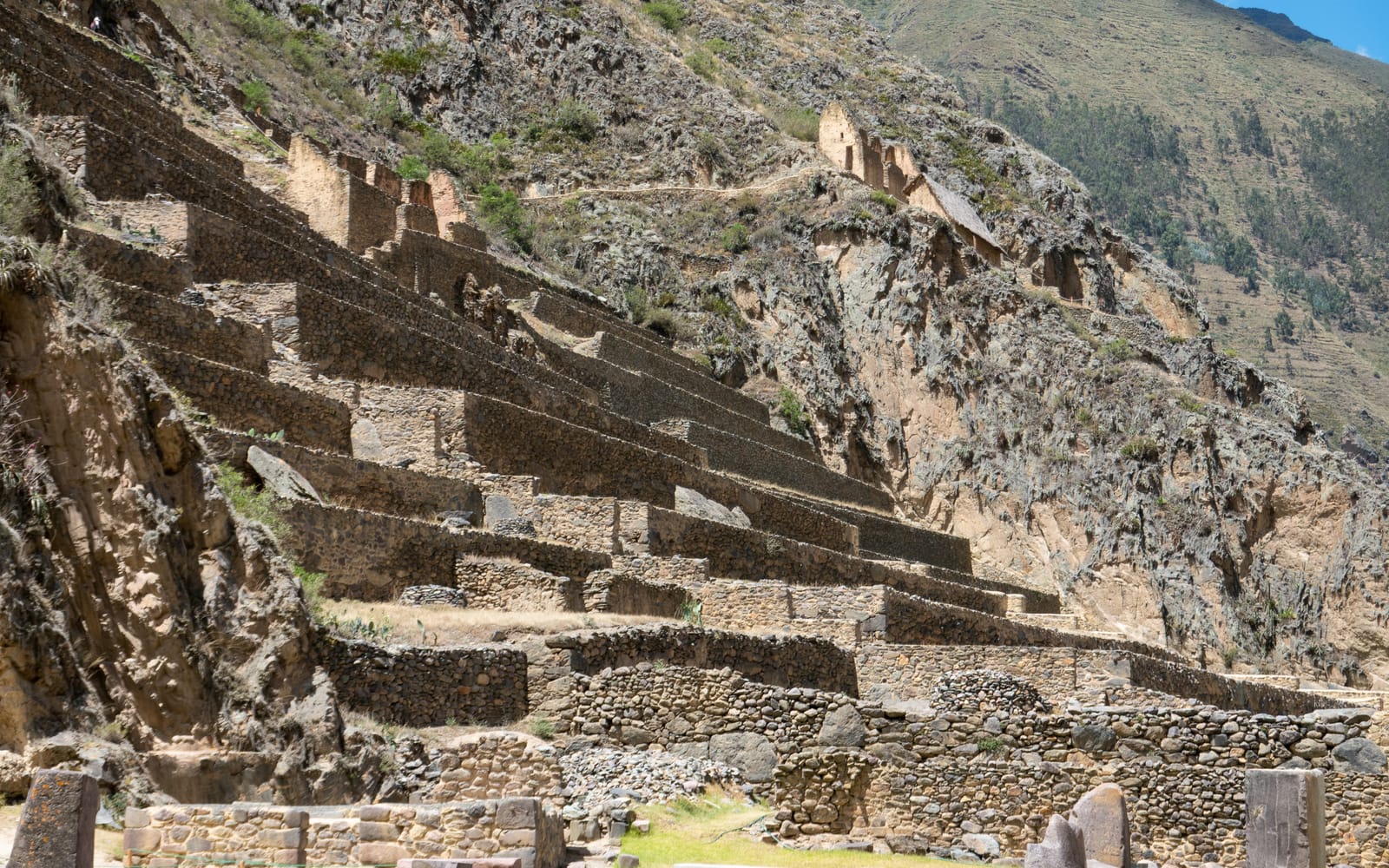
The great terraced temple hill above the town is one of the finest surviving Inca sites anywhere — seventeen tiers of stonework climbing to a Sun Temple whose fifty-tonne pink monoliths were dragged from a quarry across the valley and never quite set in place.

Inca storehouses clinging to the cliffs of Pinkuylluna above Ollantaytambo Inca sites & ruins

Pinkuylluna

Free views, Inca storehouses

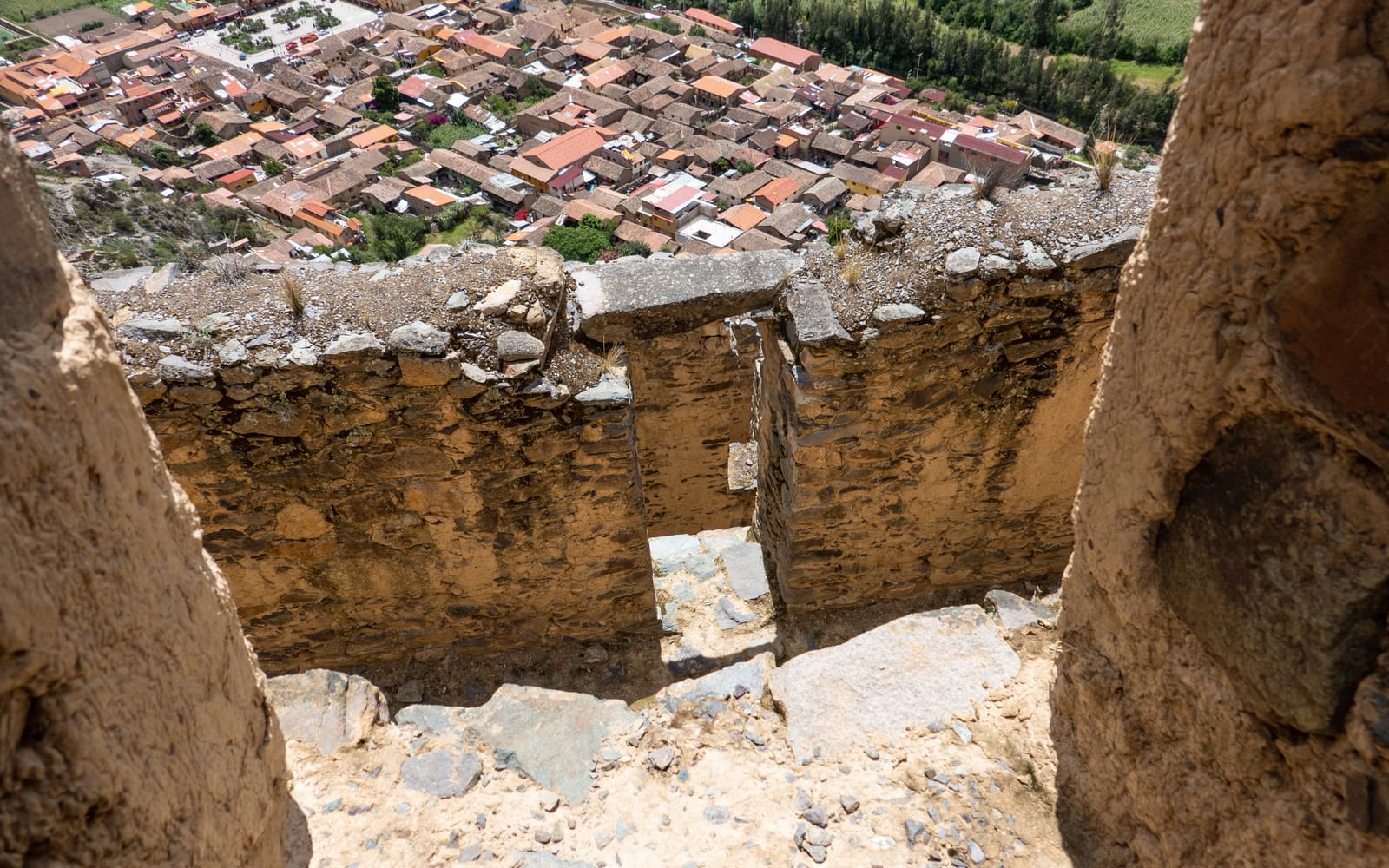
On the mountain facing the ruins, a steep footpath climbs past Inca granaries built high in the cold, dry air to preserve grain. It costs nothing, takes about an hour, and gives you the single best photograph of Ollantaytambo.

The white salt terraces of Salineras de Maras stepping down a red valley Sacred Valley day trips

Maras Salt Mines

Three thousand salt pans on a cliff

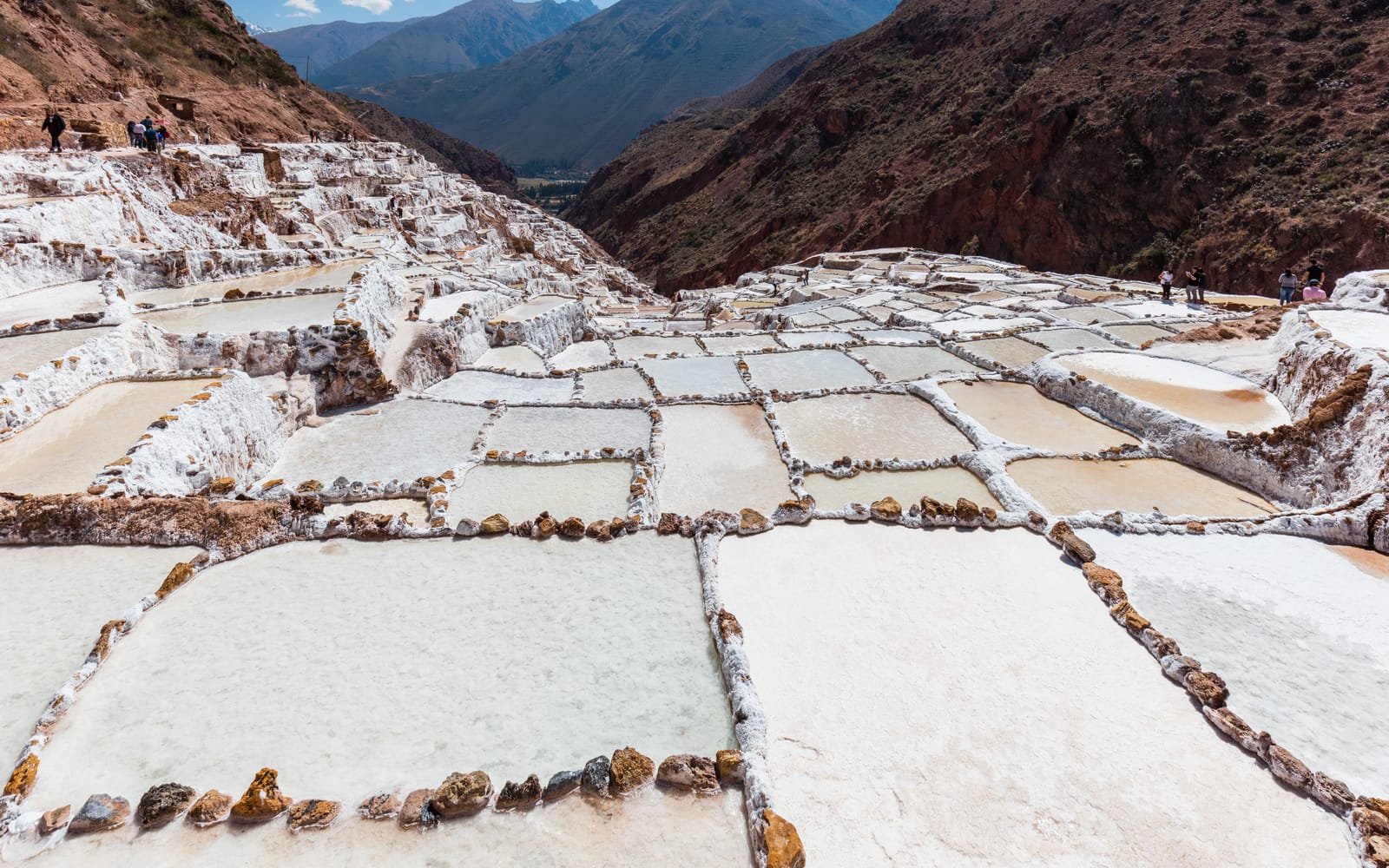
A warm, hyper-saline spring has poured out of this mountainside since long before the Inca. Local families still channel it into a honeycomb of shallow terraces and harvest the crystals by hand, exactly as their great-grandparents did.