Getting your bearings
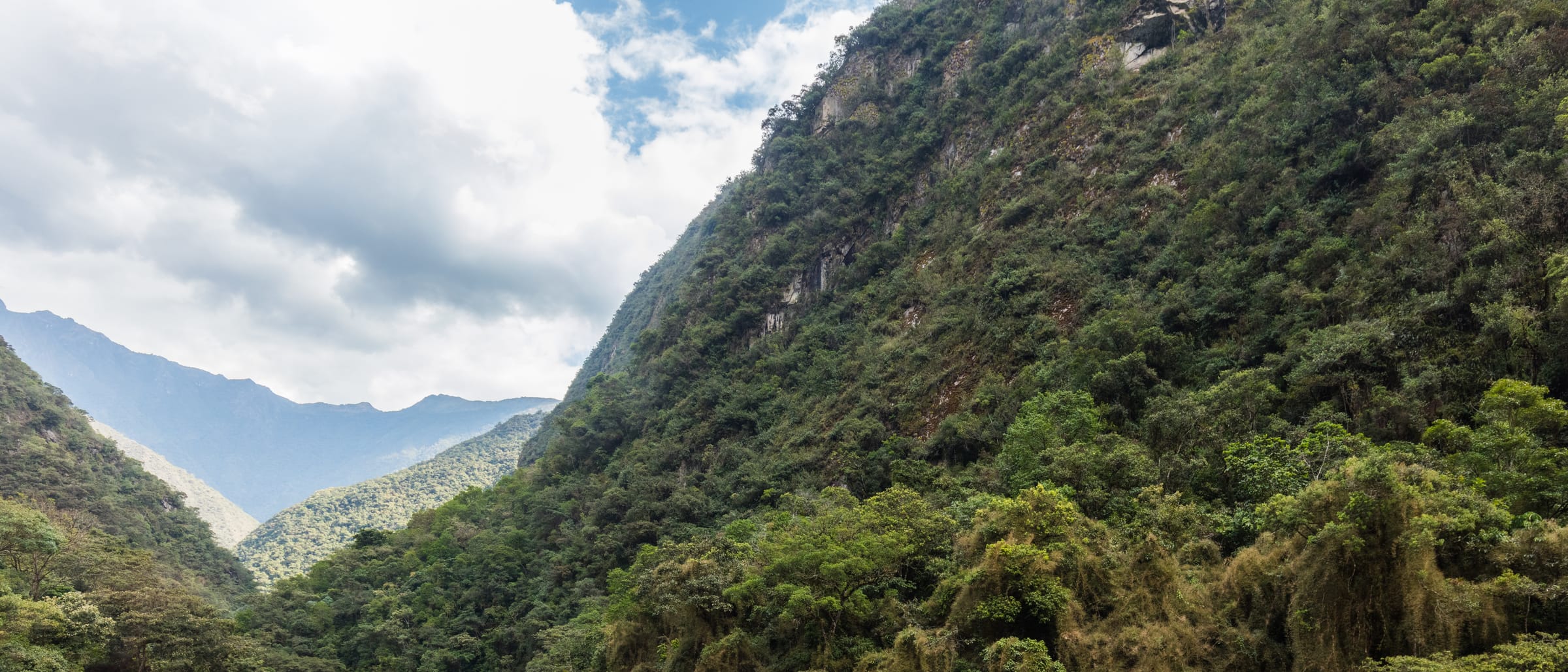
Ollantaytambo sits where the Patacancha river joins the Urubamba, 60 km north-west of Cusco and 2,792 m above the sea. The whole town is walkable in twenty minutes end to end.
The Plaza de Armas is the centre. North of it lies the Inca grid of Qosqo Ayllu; west, at the top of the square, is the entrance to the terraced archaeological site; east, a footpath climbs Pinkuylluna; and 1.5 km south-east, down Avenida Ferrocarril, is the railway station.
Almost everything a visitor needs — hotels, restaurants, the market, an ATM, tour desks — is within three blocks of the plaza.
A very short history
The emperor Pachacuti conquered the valley in the mid-15th century and rebuilt Ollantaytambo as a royal estate: terraced farmland, a planned town and a ceremonial complex above it, all laid out at once.
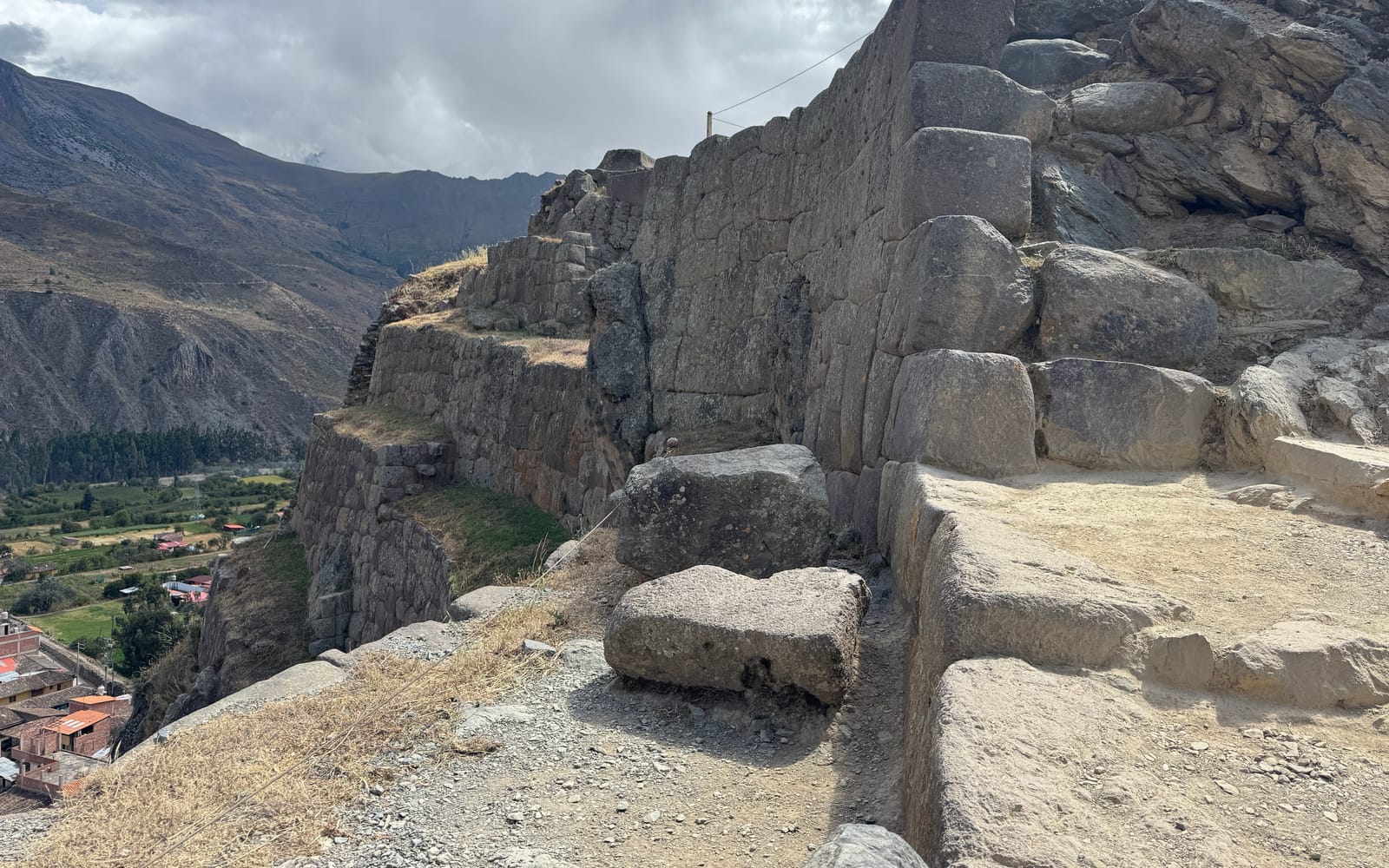
The Sun Temple at the top was never finished. Its six monoliths of rose rhyolite came from Cachiccata, a quarry six kilometres away and across the river, hauled up ramps that are still littered with abandoned blocks.
In 1537 Manco Inca made his stand here, flooding the plain below through the Inca irrigation channels and driving off Hernando Pizarro’s cavalry — one of the few outright Inca victories of the conquest. He withdrew to Vilcabamba soon afterwards.
The Spanish never rebuilt the town, which is exactly why it survives. Colonial and modern buildings sit on Inca foundations rather than replacing them, leaving the 15th-century street plan intact and inhabited.
Altitude and how to handle it
- At 2,792 m Ollantaytambo is high, but it is 600 m lower than Cusco — which is why many guides and doctors suggest spending your first Andean nights in the Sacred Valley and going up to the city later.
- Take the first day gently. Walk slowly, skip alcohol, drink far more water than feels necessary, and eat lightly.
- Coca tea (mate de coca) is offered everywhere and genuinely helps with mild symptoms. Acetazolamide is available in pharmacies but is a conversation to have with your doctor before you travel.
- Headache, breathlessness on stairs and broken sleep are normal for a day or two. Confusion, vomiting or breathlessness at rest are not — descend and get medical help.
- Save Pinkuylluna, Moray at 3,500 m and Chinchero at 3,762 m for your second or third day.
Tickets and what they cover
- The archaeological site is only enterable on the Boleto Turístico del Cusco. There is no single-site ticket, and card payment is not reliable — bring cash.
- The full 10-day ticket (around S/130 for foreign adults) covers sixteen sites including Sacsayhuamán, Pisac, Chinchero and Moray.
- The partial Circuit III ticket (around S/70, valid 2 days) covers just the Sacred Valley sites — Ollantaytambo, Pisac, Chinchero and Moray — and is the better buy for a short trip.
- The Maras salt pans are not on the Boleto and charge their own small fee at the gate. Pinkuylluna and the Inca town are free.
- Machu Picchu is entirely separate, sold by the Ministry of Culture with a daily cap and timed entry.
Money, prices and tipping
- The currency is the Peruvian sol (PEN). Cards are accepted in hotels and the better restaurants; almost nowhere else.
- There are only a couple of ATMs in town and they do run dry. Draw cash in Cusco or Urubamba before you arrive.
- A menú del día — soup, main course and a drink — costs roughly S/15–25. A tourist-facing restaurant on the plaza will be double that.
- Tipping is not obligatory but is normal: round up in restaurants, a few soles for a mototaxi, and S/20–40 per person per day for a good guide.
What to eat
- Trucha — river trout, usually fried or a la plancha — is the local staple and reliably good.
- Cuy (guinea pig) and chicharrón de chancho are the classic celebration dishes and appear on most menus.
- Soups do the heavy lifting at altitude: quinoa soup, sopa criolla and chairo will do more for you at 2,800 m than a steak.
- Chicha de jora, the fermented maize beer, is sold at home chicherías — look for a red plastic bag hoisted on a pole outside a house.
- Choclo con queso, giant Sacred Valley corn with fresh cheese, is sold everywhere and is the best two soles you will spend.
What to pack
- Layers. The daily swing between midday sun and after-dark cold is bigger here than the seasonal swing.
- Serious sun protection — hat, high-factor sunscreen and sunglasses. UV at 2,800 m is unforgiving even under cloud.
- Shoes with grip. The Inca steps, the Pinkuylluna path and the polished cobbles are all slippery in different ways.
- A rain shell from November to March, and a warm layer for the evening in every month.
- Cash in small notes, your passport for train and Machu Picchu checks, and a refillable water bottle.
How long to stay
One night
Arrive from Cusco in the afternoon, visit the archaeological site in the last light, eat on the plaza, and take an early Machu Picchu train the next morning. The minimum that makes sense.
Two nights
Add a full day: the ruins at opening, Pinkuylluna before lunch, then an afternoon in the Inca streets and the market. Or swap the afternoon for a half-day to Maras and Moray.
Three nights
The version we would choose. Day one the site and the town, day two Maras and Moray, day three either the Patacancha valley and a weaving community, or Ñaupa Iglesia and the Pumamarca hike.
Festivals worth planning around
- Bajada de Reyes (6 January) — Epiphany, marked with processions, dancing and a good deal of chicha.
- Señor de Choquekillka (movable, around Pentecost in May or June) — Ollantaytambo’s own patron festival and by far its biggest: brass bands, masked dancers and bullfights over several days.
- Inti Raymi (24 June) — the Inca festival of the sun, staged in Cusco but felt across the whole region, and the busiest week of the year.
- Fiestas Patrias (28–29 July) — Peruvian independence, when domestic tourism peaks and prices rise.
A few words that help
| Allillanchu | Hello / how are you (Quechua) |
|---|---|
| Sulpayki | Thank you (Quechua) |
| Apu | Sacred mountain spirit |
| Cancha | Walled Inca compound |
| Qollqa | Inca storehouse |
| Andén | Agricultural terrace |